50th Anniversary MSTS Annual Meeting
A curated collection of peer-reviewed research abstracts. Explore the gallery, search by paper number or title, and open any full paper directly.
Abstract Gallery
86 abstracts
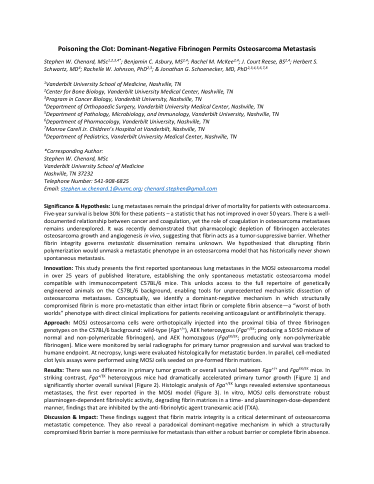
Poisoning the Clot: Dominant-Negative Fibrinogen Permits Osteosarcoma Metastasis
Stephen W. Chenard, MSc
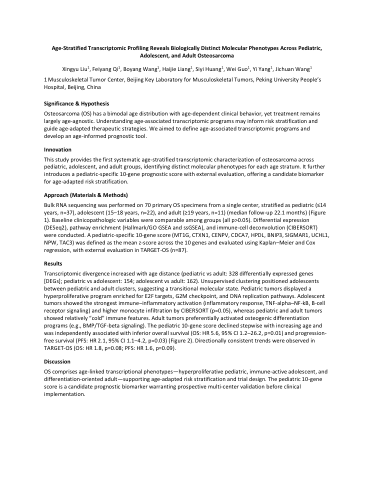
Age-Stratified Transcriptomic Profiling Reveals Biologically Distinct Molecular Phenotypes Across Pediatric, Adolescent, and Adult Osteosarcoma
David Geller, MD, MBA
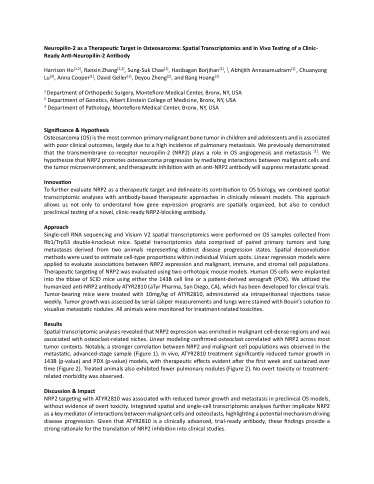
Neuropilin-2 as a Therapeutic Target in Osteosarcoma: Spatial Transcriptomics and In Vivo Testing of a Clinic-Ready Anti-Neuropilin-2 Antibody
Sung-Suk Chae, PhD
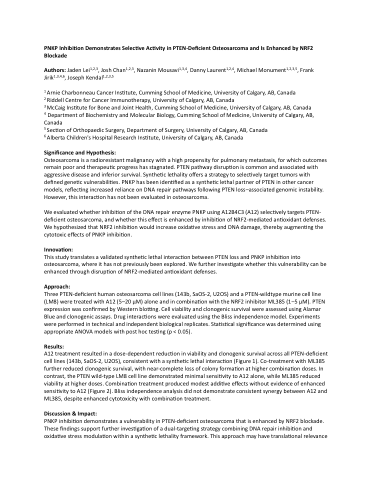
PNKP Inhibition Demonstrates Selective Activity in PTEN-Deficient Osteosarcoma and Is Enhanced by NRF2 Blockade
Joseph Kendal, MD, FRCSC
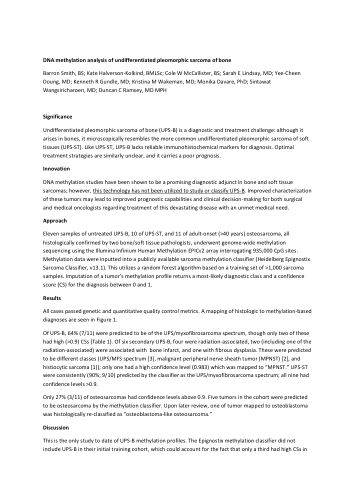
DNA methylation analysis of undifferentiated pleomorphic sarcoma of bone
Duncan C Ramsey, MD, MPH
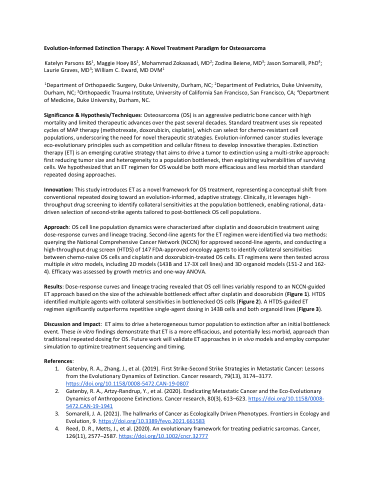
Evolution-Informed Extinction Therapy: A Novel Treatment Paradigm for Osteosarcoma
William Eward, MD, DVM
Translational Evaluation of ALDH and MMP-9 Expression in Osteosarcoma: Insights into Chemotherapy Response and Survival from a Single-Center Cohort
Ana Valeria Rigolino Teixeira, MD
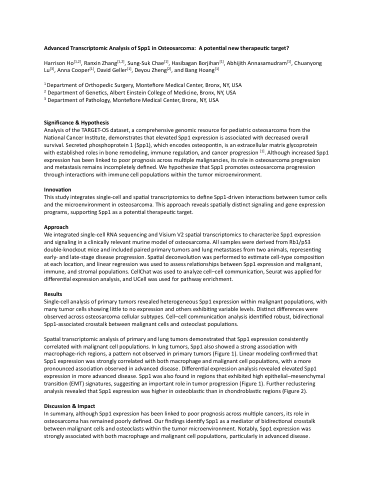
Advanced Transcriptomic Analysis of Spp1 in Osteosarcoma: A potential new therapeutic target?
Sung-Suk Chae, PhD
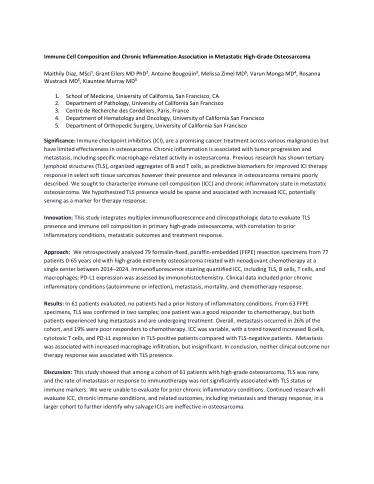
Immune Cell Composition and Chronic Inflammation Association in Primary High-Grade Osteosarcoma
Rosanna Wustrack, MD
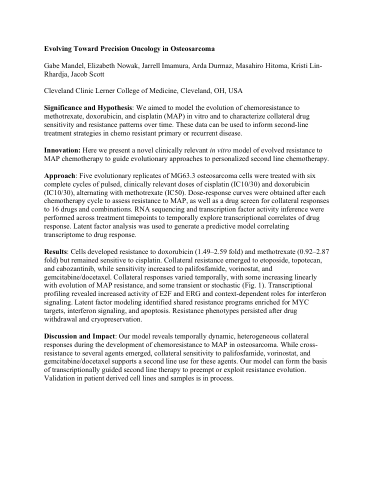
Evolving Toward Precision Oncology in Osteosarcoma
Zachary Burke, MD
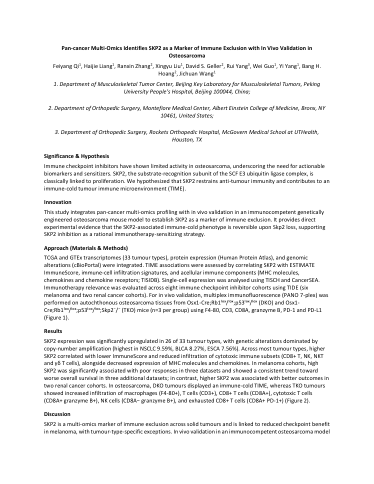
Pan-cancer Multi-Omics Identifies SKP2 as a Marker of Immune Exclusion with In Vivo Validation in Osteosarcoma
David Geller, MD, MBA
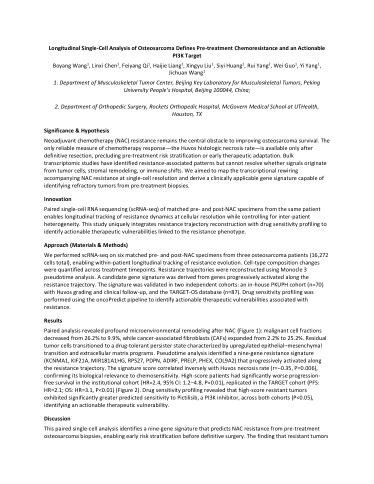
Longitudinal Single-Cell Analysis of Osteosarcoma Defines Pre-treatment Chemoresistance and an Actionable PI3K Target
David Geller, MD, MBA

Tumor-Mediated Fibrinolysis as a Mechanism and Therapeutic Target in Osteosarcoma Metastasis
Stephen Chenard. MSc
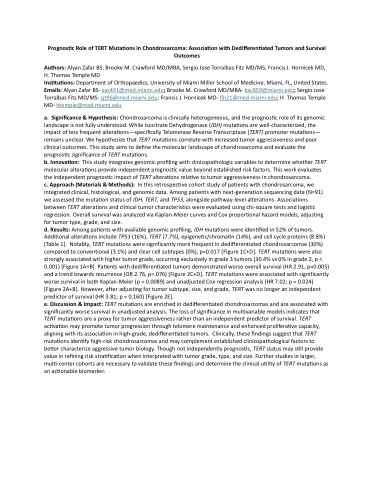
Prognostic Role of TERT Mutations in Chondrosarcoma: Association with Dedifferentiated Tumors and Survival Outcomes
H. Thomas Temple, MD
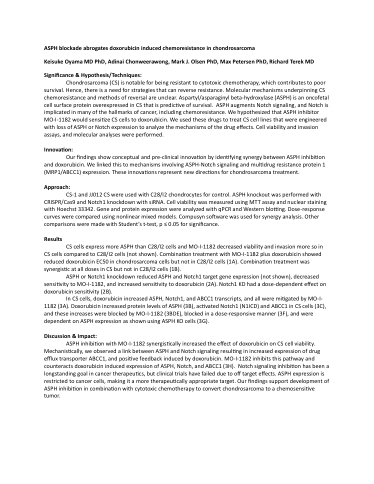
ASPH blockade abrogates doxorubicin induced chemoresistance in chondrosarcoma
Richard Terek, MD, FACS
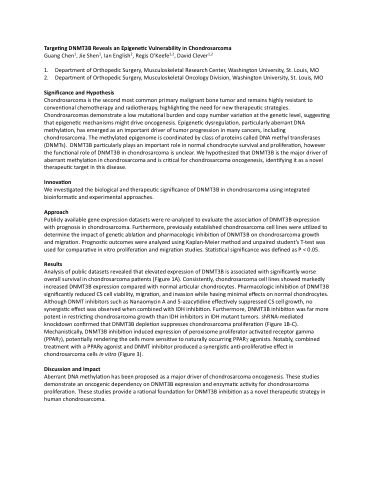
Targeting DNMT3B Reveals an Epigenetic Vulnerability in Chondrosarcoma
David Clever, MD
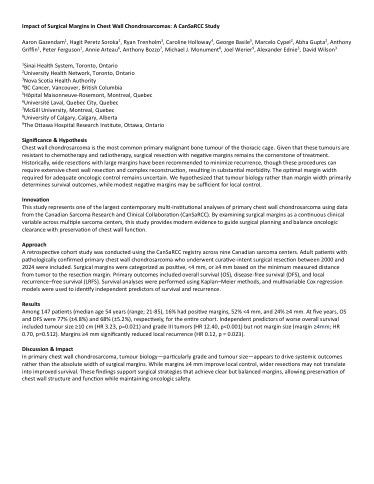
Impact of Surgical Margins in Chest Wall Chondrosarcomas: A CanSaRCC Study
Aaron Gazendam, MD, FRCSC
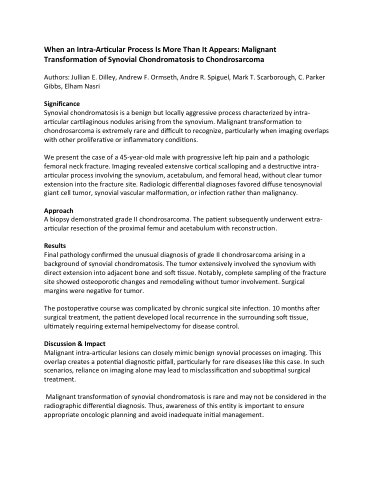
When an Intra-Articular Process Is More Than It Appears: Malignant Transformation of Synovial Chondromatosis to Chondrosarcoma
Julian Emerson Dilley, MD
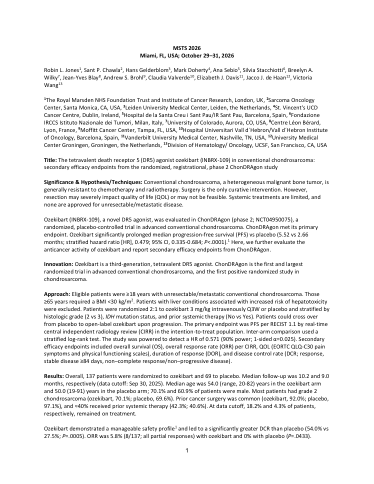
The tetravalent death receptor 5 (DR5) agonist ozekibart (INBRX-109) in conventional chondrosarcoma: secondary efficacy endpoints from the randomized, registrational, phase 2 ChonDRAgon study
Robin L. Jones, MD
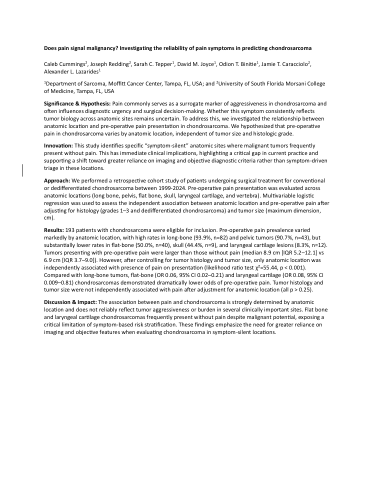
Does pain signal malignancy? Investigating the reliability of pain symptoms in predicting chondrosarcoma
Alexander Lazarides, MD
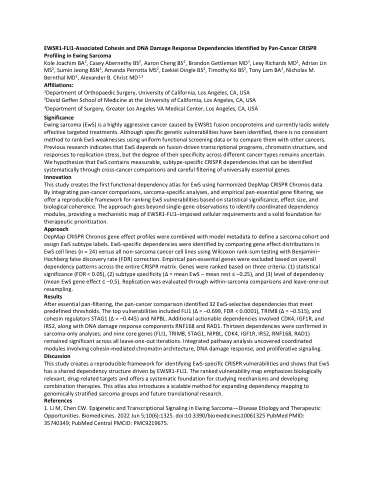
EWSR1-FLI1-Associated Cohesin and DNA Damage Response Dependencies Identified by Pan-Cancer CRISPR Profiling in Ewing Sarcoma
Brandon Gettleman, MD
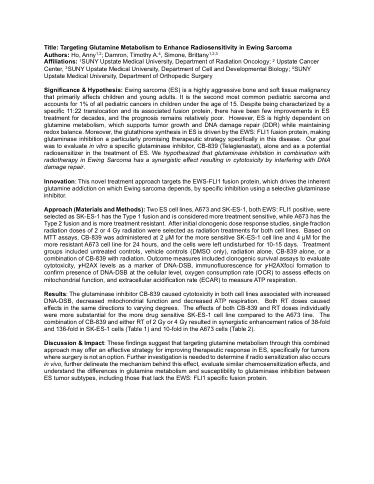
Targeting Glutamine Metabolism to Enhance Radiosensitivity in Ewing Sarcoma
Brittany Simone, DO
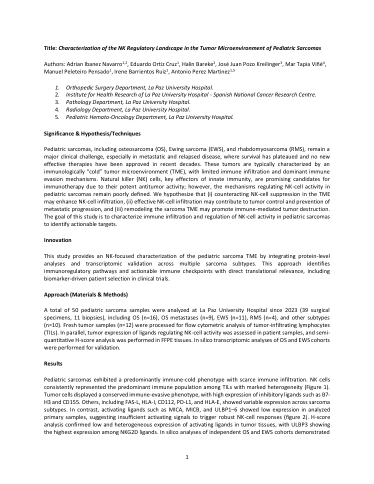
Characterization of the NK Regulatory Landscape in the Tumor Microenvironment of Pediatric Sarcomas
Adrian Ibanez Navarro, MD
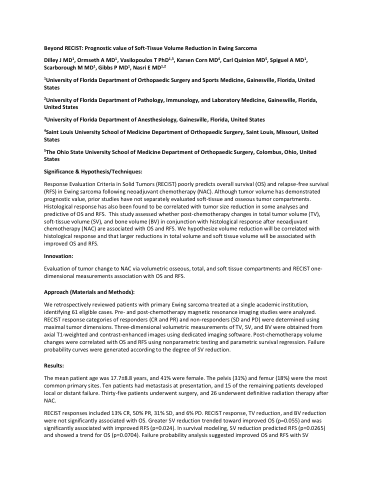
Beyond RECIST: Prognostic value of Soft-Tissue Volume Reduction in Ewing Sarcoma
Julian Emerson Dilley, MD
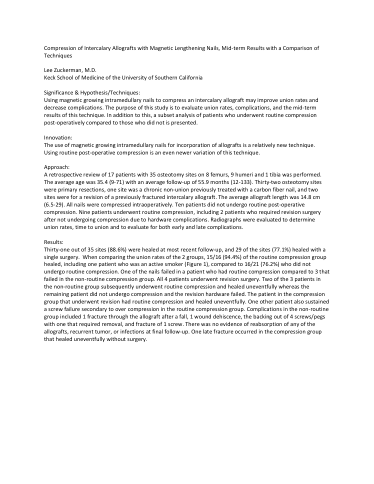
Compression of Intercalary Allografts with Magnetic Lengthening Nails, Mid-term Results with a Comparison of Techniques
Lee Zuckerman, MD
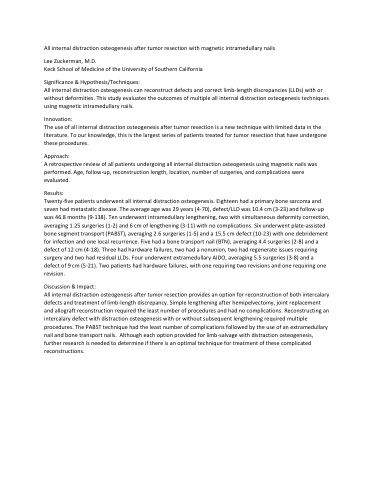
All internal distraction osteogenesis after tumor resection with magnetic intramedullary nails
Lee Zuckerman, MD
Appositional bone growth is a risk for aseptic loosening following lower extremity endoprosthetic reconstruction in pediatric bone sarcoma patients
Michael Colello, MD
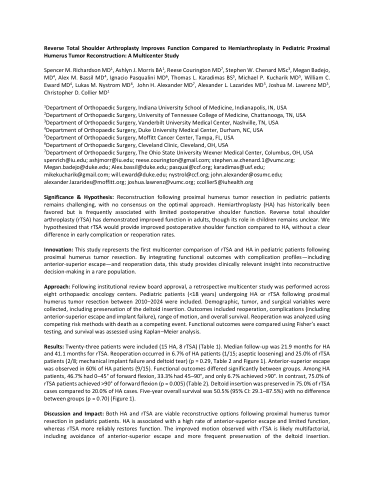
Reverse Total Shoulder Arthroplasty Improves Function Compared to Hemiarthroplasty in Pediatric Proximal Humerus Tumor Reconstruction: A Multicenter Study
Spencer M. Richardson, MD
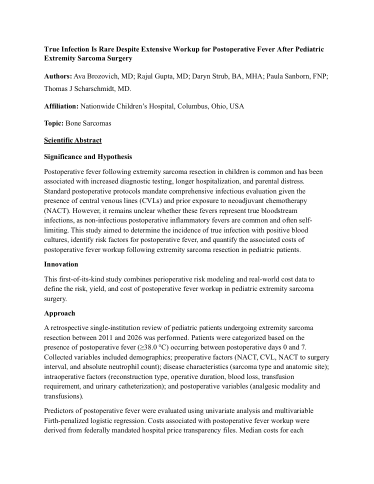
True Infection Is Rare Despite Extensive Workup for Postoperative Fever After Pediatric Extremity Sarcoma Surgery
Rajul Gupta, MD
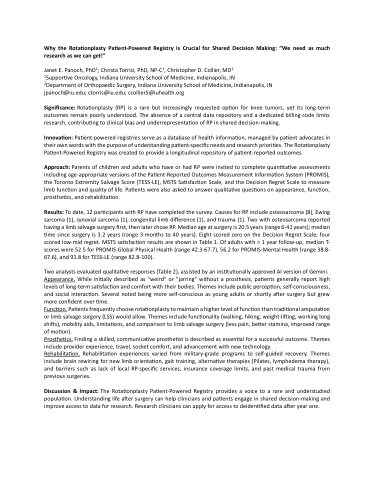
Why the Rotationplasty Patient-Powered Registry Is Crucial for Shared Decision Making: "We need as much research as we can get!"
Janet E. Panoch, PhD
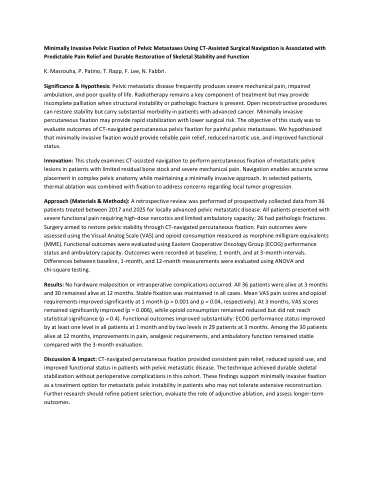
Minimally Invasive Pelvic Fixation of Pelvic Metastases Using CT-Assisted Surgical Navigation is Associated with Predictable Pain Relief and Durable Restoration of Skeletal Stability and Function
Nicola Fabbri, MD
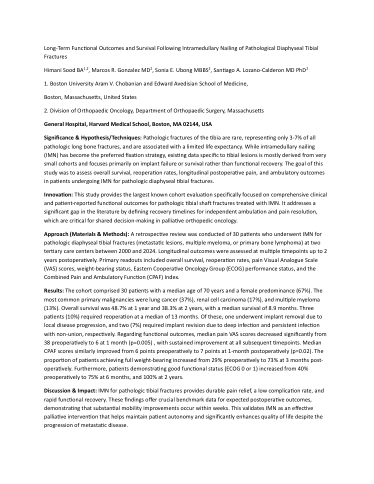
Long-Term Functional Outcomes and Survival Following Intramedullary Nailing of Pathological Diaphyseal Tibial Fractures)
Sonia Ubong, MBBS
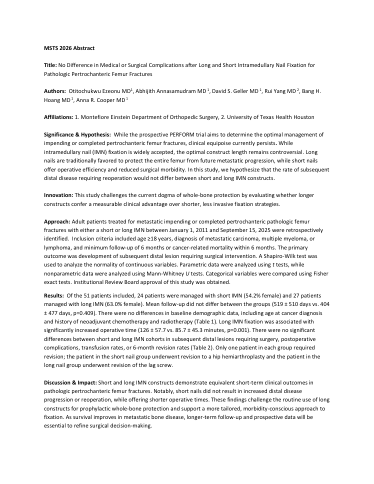
No Difference in Medical or Surgical Complications after Long and Short Intramedullary Nail Fixation for Pathologic Pertrochanteric Femur Fractures.
Otitochukwu Ezeonu, MD
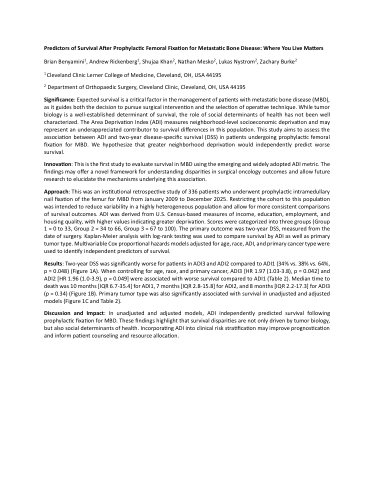
Predictors of Survival After Prophylactic Femoral Fixation for Metastatic Bone Disease: Where You Live Matters
Brian Benyamini
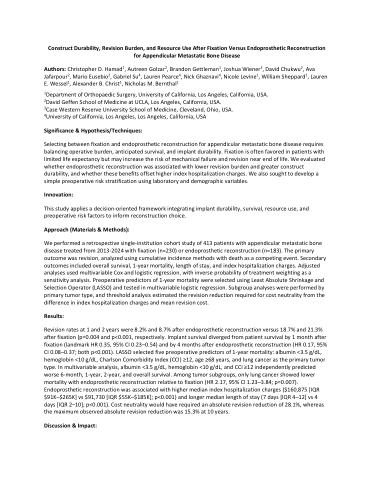
Construct Durability, Revision Burden, and Resource Use After Fixation Versus Endoprosthetic Reconstruction for Appendicular Metastatic Bone Disease
Christopher D Hamad, MD
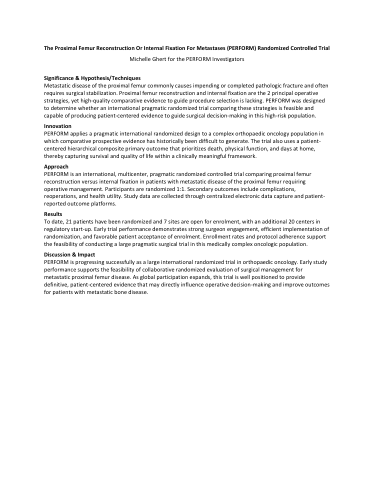
The Proximal Femur Reconstruction or Internal Fixation for Metastases (PERFORM) International Randomized Controlled Trial
Michelle Ghert, MD, FCSC
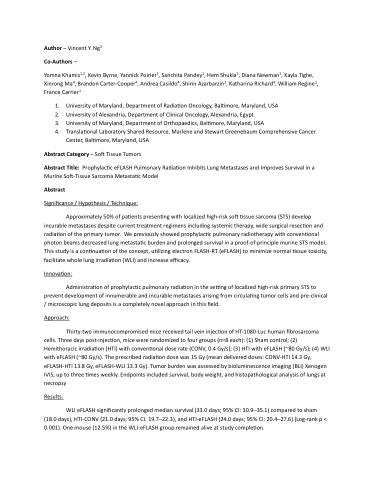
Prophylactic eFLASH Pulmonary Radiation Inhibits Lung Metastases and Improves Survival in a Murine Soft-Tissue Sarcoma Metastatic Model
Vincent Y. Ng, MD
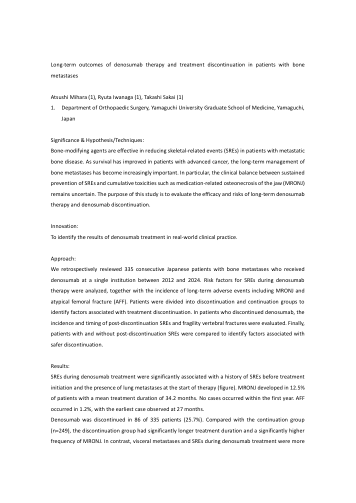
Long-term outcomes of denosumab therapy and treatment discontinuation in patients with bone metastases
Atsushi Mihara, MD
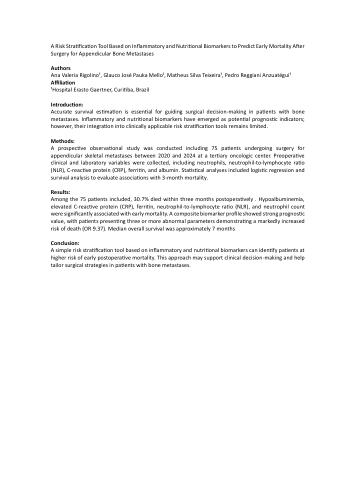
A Risk Stratification Tool Based on Inflammatory and Nutritional Biomarkers to Predict Early Mortality After Surgery for Appendicular Bone Metastases
Ana Valeria Rigolino Teixeira, MD
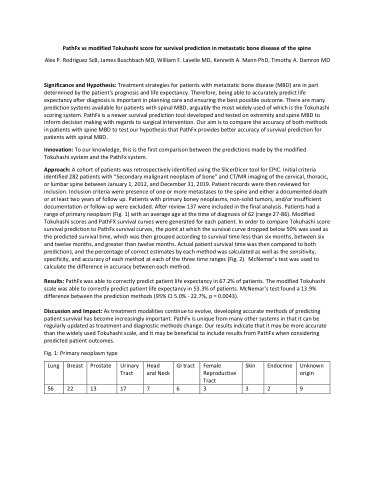
PathFx vs modified Tokuhashi score for survival prediction in metastatic bone disease of the spine
Divakar N. Lal, MD
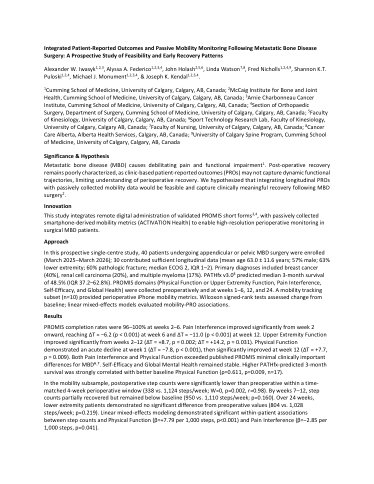
Integrated Patient-Reported Outcomes and Passive Mobility Monitoring Following Metastatic Bone Disease Surgery: A Prospective Study of Feasibility and Early Recovery Patterns
Joseph Kendal, MD, FRCSC
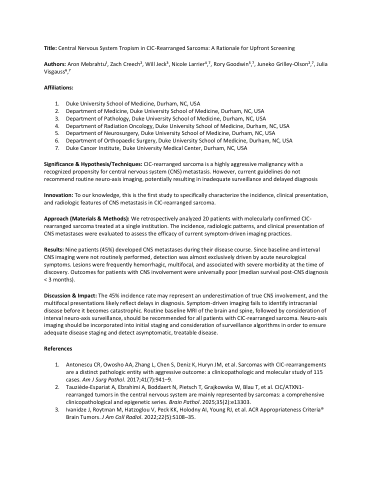
Central Nervous System Tropism in CIC-Rearranged Sarcoma: A Rationale for Upfront Screening
Aron Mebrahtu
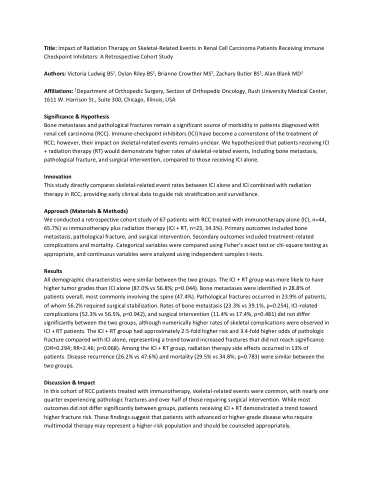
Impact of Radiation Therapy on Skeletal-Related Events in Renal Cell Carcinoma Patients Receiving Immune Checkpoint Inhibitors: A Retrospective Cohort Study
Alan T. Blank, MD, MS
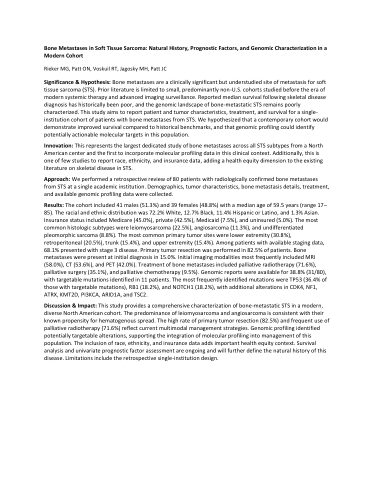
Bone Metastases in Soft Tissue Sarcoma: Natural History, Prognostic Factors, and Genomic Characterization in a Modern Cohort
Madeline Rieker, MD
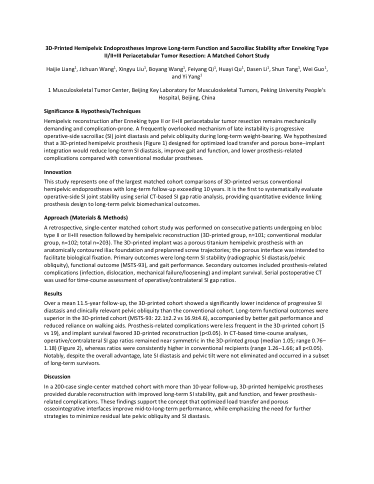
3D-Printed Hemipelvic Endoprostheses Improve Long-term Function and Sacroiliac Stability after Enneking Type II/II+III Periacetabular Tumor Resection: A Matched Cohort Study
David Geller, MD, MBA
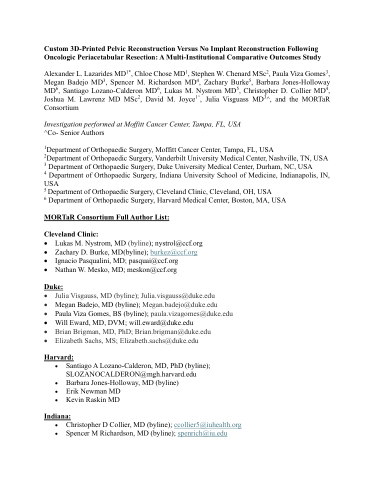
Custom 3D-Printed Pelvic Reconstruction Versus No Implant Reconstruction Following Oncologic Periacetabular Resection: A Multi-Institutional Comparative Outcomes Study
Alexander Lazarides, MD
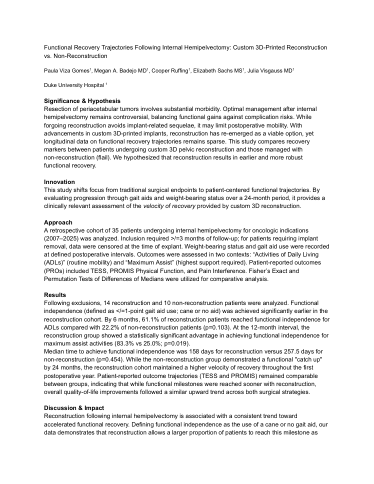
Functional Recovery Trajectories Following Internal Hemipelvectomy: Custom 3D-Printed Reconstruction vs. Non-Reconstruction
William Eward, MD, DVM
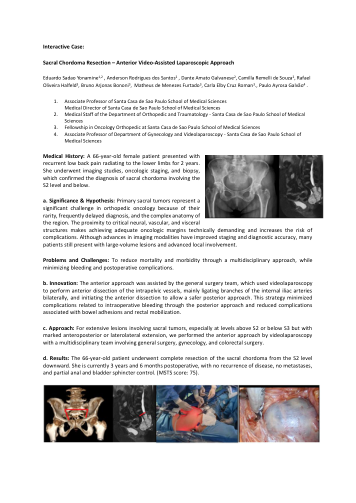
Sacral Chordoma Resection - Anterior Video-Assisted Laparoscopic Approach
EDUARDO SADAO YONAMINE, MD

When a Recurrent Giant Cell Tumor of Bone Is Not the Same Tumor: Dedifferentiation with Previously Unreported Squamous Differentiation Highlighting Tumor Heterogeneity and the Need for Repeat Histologic Assessment.
Drew Ormseth, MD

Progression of Fibrous Dysplasia to Low-Grade Central Osteosarcoma: Reassessing Tumor Biology When the Clinical Course Deviates.
Drew Ormseth, MD
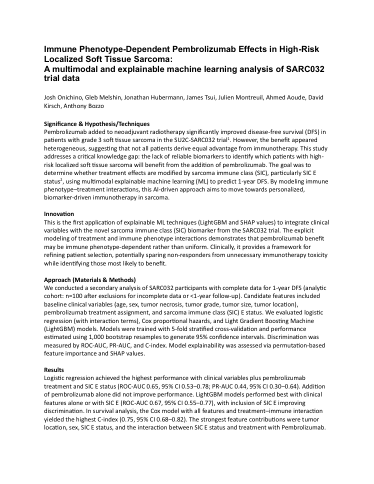
Immune Phenotype-Dependent Pembrolizumab Effects in High-Risk Localized Soft Tissue Sarcoma: A multimodal and explainable machine learning analysis of SARC032 trial data
Anthony Bozzo, MD, FRCSC
AR for Sarcoma Surgery - the Future is Here
Ahmed Aoude, MD, FRCSC
An End-to-End Deep Learning Framework and Multicenter Validation for the Diagnosis of Retroperitoneal Soft Tissue Sarcoma
Tong Meng, MD
Augmented Reality Guidance for Targeted Re-Resection of Positive Margins in Sarcoma
Michael Colello, MD
Preoperative Surgical Margin Assessment Using a Three-Dimensional-Printed Model for Simulated Surgery of Periarticular Malignant Bone Tumors
Shachar Kenan, MD
Development and Optimization of In-Situ Local Tumor Ablation and Recycling System for Consistent Heating and Clinical Translation
Min Wook Joo, MD, PhD
Sarcoma Resection Guided by Intraoperative Indocyanine Green Dye Fluorescence Angiography
Mikaela Sullivan, MD
Impact of Neoadjuvant Radiation on Pathogen Profiles and Cefazolin Coverage in Soft Tissue Sarcoma Resection
William Eward, MD, DVM
Plantar Fibromatosis: Surgical Approach for a Tumor with a Tissue-Specific Propensity for Recurrence
William G Ward, MD, FACS
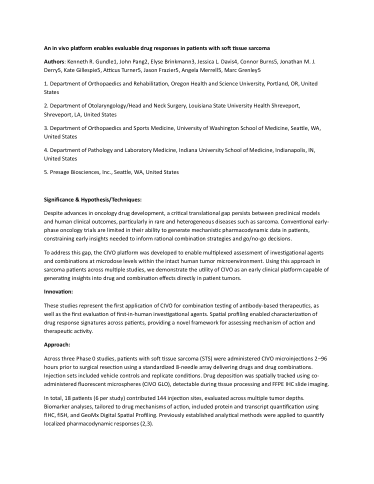
An in vivo platform enables evaluable drug responses in patients with soft tissue sarcoma
Kenneth Gundle, MD
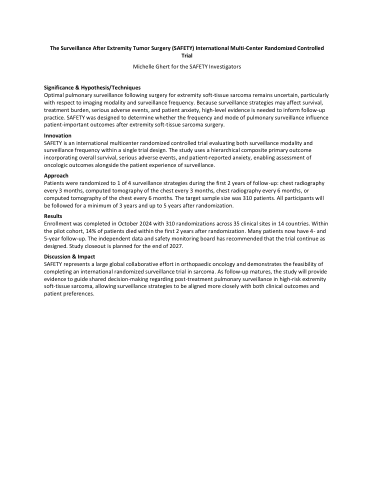
The Surveillance After Extremity Tumor Surgery (SAFETY) International Randomized Controlled Trial
Michelle Ghert, MD, FCSC
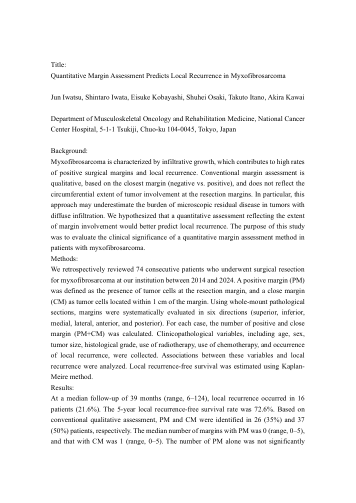
Quantitative Margin Assessment Predicts Local Recurrence in Myxofibrosarcoma
Jun Iwatsu, MD
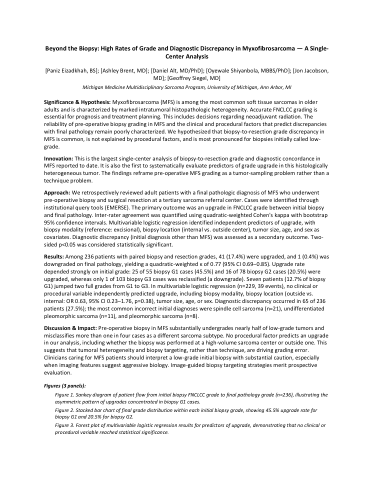
Beyond the Biopsy: High Rates of Grade and Diagnostic Discrepancy in Myxofibrosarcoma - A Single-Center Analysis
Paniz Eizadkhah
Expanding Indications for Compress® Mega-prosthetic Reconstruction: Successful Management of High-Risk Patients (Age >50, Cortical Thickness <2.5 mm, or Pre-operative Smoking)
Jungo Imanishi, MD, PhD
Multidisciplinary Collaboration in Chest Wall Surgery: Excellent Outcomes with a First of Its Kind Combined Orthopedic and Thoracic Team
Nathan W. Mesko, MD
What Factors Are Associated with Instability After Endoprosthetic Reverse Total Shoulder Arthroplasty for Oncologic Reconstruction of the Proximal Humerus?
Alexander Lazarides, MD
Adverse Events and Patient-Reported Outcomes with the Osseointegrated Prostheses for the Rehabilitation of Amputees (OPRA) Implant in Transfemoral Amputees
Melissa Zimel, MD
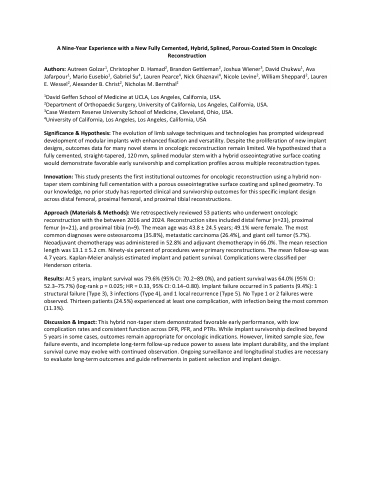
A Nine-Year Experience with a New Fully Cemented, Hybrid, Splined, Porous-Coated Stem in Oncologic Reconstruction
Christopher Hamad, MD
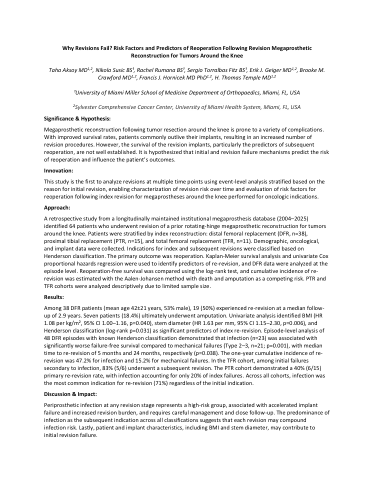
Why Revisions Fail? Risk Factors and Predictors of Reoperation Following Revision Megaprosthetic Reconstruction for Tumors Around the Knee
Taha Aksoy, MD
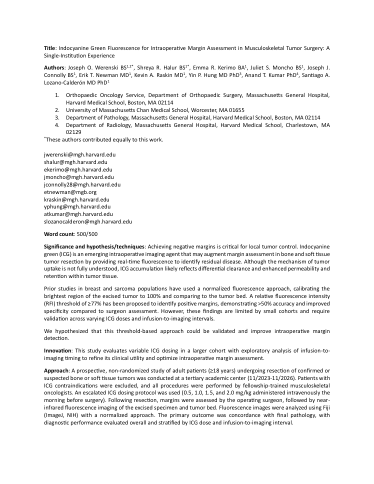
Indocyanine Green Fluorescence for Intraoperative Margin Assessment in Musculoskeletal Tumor Surgery: A Single-Institution Experience
Sonia Ubong, MBBS
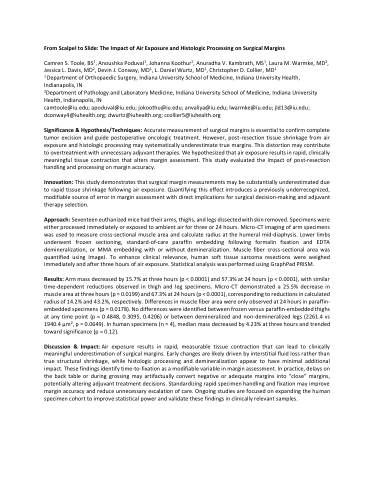
From Scalpel to Slide: The Impact of Air Exposure and Histologic Processing on Surgical Margins
Christopher Collier, MD
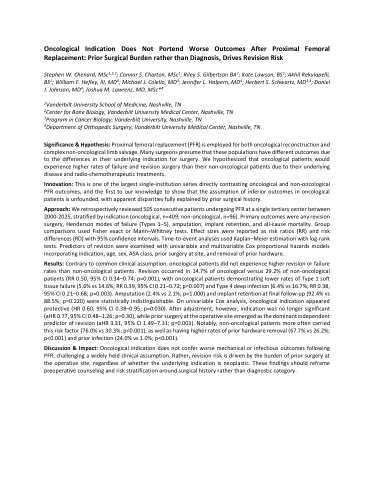
Oncological Indication Does Not Portend Worse Outcomes After Proximal Femoral Replacement: Prior Surgical Burden rather than Diagnosis, Drives Revision Risk
Stephen W. Chenard, MSc
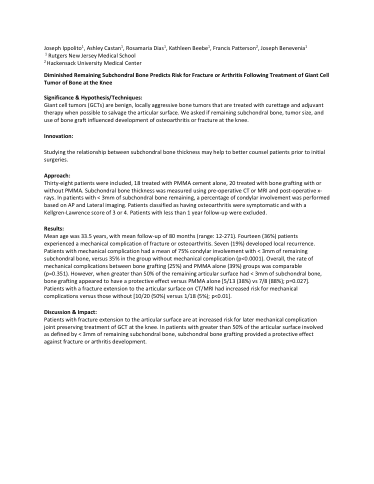
Diminished Remaining Subchondral Bone Predicts Risk for Fracture or Arthritis Following Treatment of Giant Cell Tumor of Bone at the Knee
Joseph Ippolito, MD
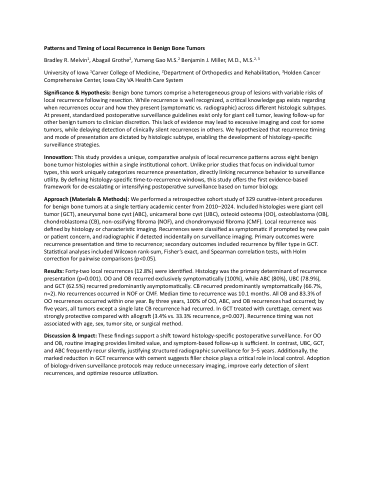
Patterns and Timing of Local Recurrence in Benign Bone Tumors
Bradley Melvin
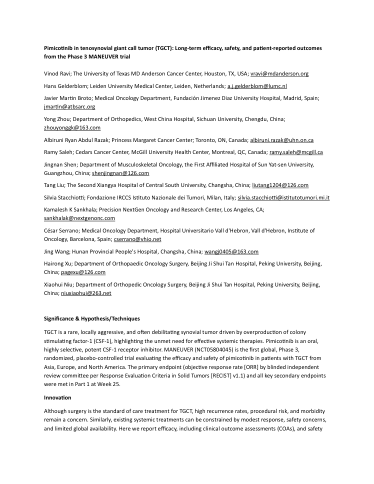
Pimicotinib in tenosynovial giant call tumor (TGCT): Long-term efficacy, safety, and patient-reported outcomes from the Phase 3 MANEUVER trial
Vinod Ravi, MD
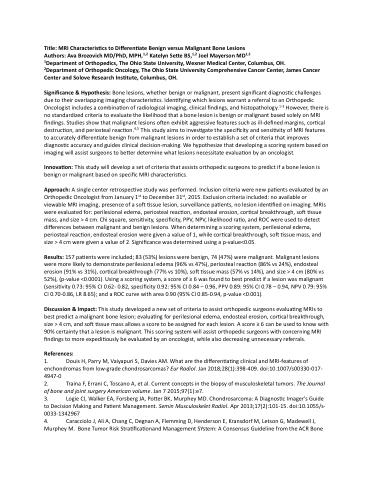
MRI Characteristics to Differentiate Benign versus Malignant Bone Lesions
Ava Brozovich, MD
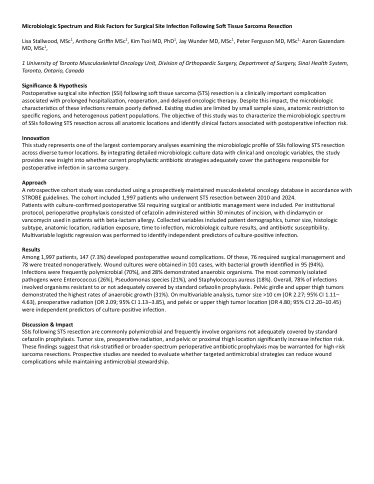
Microbiologic Spectrum and Risk Factors for Surgical Site Infection Following Soft Tissue Sarcoma Resection
Aaron Gazendam, MD, FRCSC
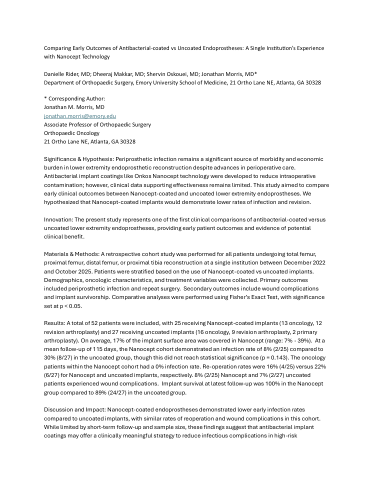
Comparing Early Outcomes of Antibacterial-coated vs Uncoated Endoprostheses: A Single Institution's Experience with Nanocept Technology
Danielle Rider, MD
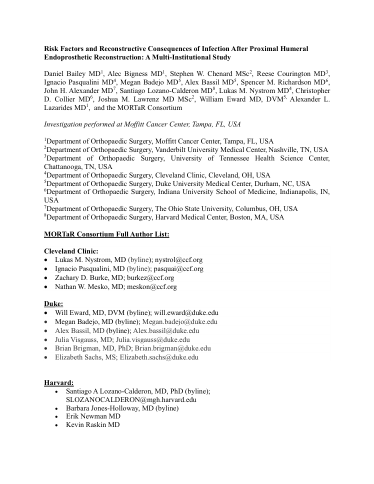
Risk Factors and Reconstructive Consequences of Infection After Proximal Humeral Endoprosthetic Reconstruction: A Multi-Institutional Study
Alexander Lazarides, MD
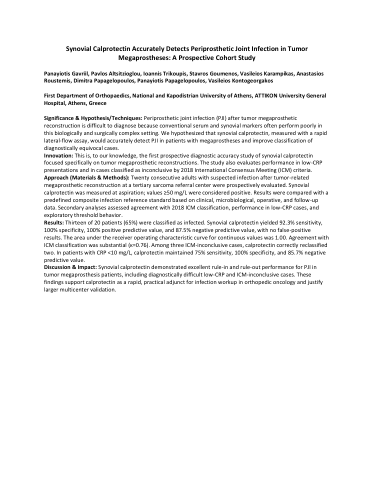
Synovial Calprotectin Accurately Detects Periprosthetic Joint Infection in Tumor Megaprostheses: A Prospective Cohort Study
Panayiotis Gavriil, MD
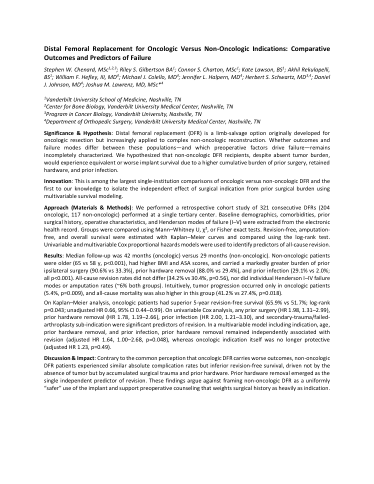
Distal Femoral Replacement for Oncologic Versus Non-Oncologic Indications: Comparative Outcomes and Predictors of Failure
Stephen Chenard, MSc
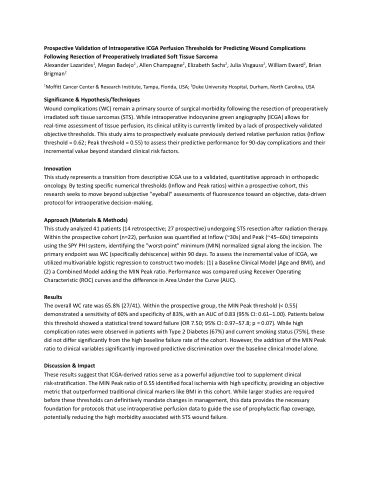
Prospective Validation of Intraoperative ICGA Perfusion Thresholds for Predicting Wound Complications Following Resection of Preoperatively Irradiated Soft Tissue Sarcoma
Alexander Lazarides, MD
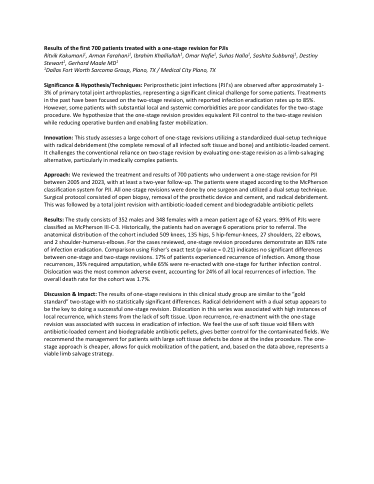
Results of the first 700 patients treated with a one-stage revision for PJIs
Gerhard Maale, MD
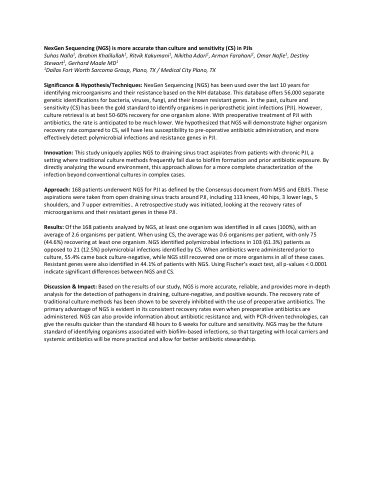
NexGen Sequencing (NGS) is more accurate than culture and sensitivity (CS) in PJIs
Gerhard Maale, MD
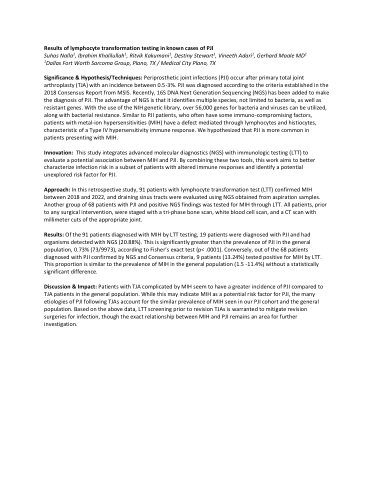
Results of lymphocyte transformation testing in known cases of PJI
Gerhard Maale, MD
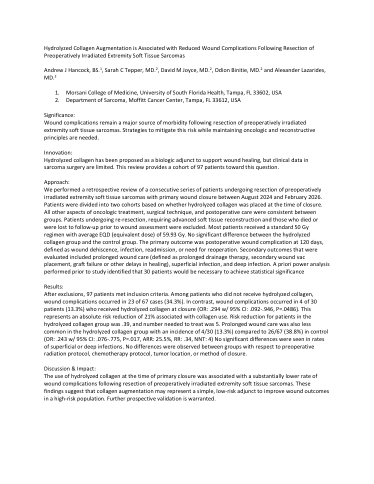
Hydrolyzed Collagen Augmentation is Associated with Reduced Wound Complications Following Resection of Preoperatively Irradiated Extremity Soft Tissue Sarcomas
Alexander Lazarides, MD